
Florida A&M University School of Journalism & Graphic Communication (FAMU SJGC) Dean Mira Lowe opened her recent Tallahassee Democrat op-ed with a clear message about the future of journalism: “Today’s journalists will inherit an AI-shaped information ecosystem. Our job is to ensure they enter it prepared, not intimidated, naïve or uncritical.”
In the opinion piece, titled “FAMU prepares journalists for an AI era with clear ethics,” Lowe outlined how FAMU SJGC is equipping students with the tools, abilities and mindset needed for the modern newsroom. She shared the school’s philosophy for preparing the next generation of journalists in an age defined by artificial intelligence.
The approach includes:
Teaching students to stay focused on fundamentals, with verification, research and reporting as the starting points for every story.
Ensuring students understand that AI is a tool, and that its use in journalism must be transparent and properly evaluated to ensure accurate assessment, documentation and disclosure.
Challenging students to remain creative and thoughtful, with the understanding that AI can assist the work but should never replace human judgment.
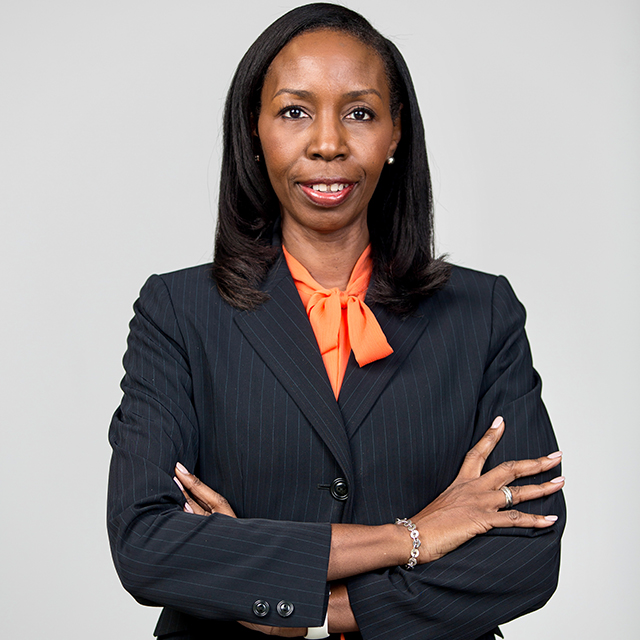
“Journalism now intersects with data, design and public policy, and our graduates must be fluent not only in the tools but in their civic implications — bias, privacy, labor, environmental impact, information integrity and the expanding reach of algorithmic systems. That isn’t technophobia. It’s responsible preparation for a world where technology shapes everyday life,” Lowe wrote.
From Microsoft Copilot and ChatGPT to Perplexity AI and other generative tools, Lowe emphasized how faculty guide students in using these systems for idea generation, research, experimentation, sourcing and analysis, but always with guardrails. Those include tracing sources, challenging outputs and watching for hallucinations.
Lowe also highlighted how FAMU SJGC has built an active learning community around the challenges and opportunities of AI, not only for students but for faculty and staff. Recent efforts include the “AI in Action: Leveraging Technology in Teaching, Research & Workflow” retreat, which focused on responsible use of AI in curricula, scholarship and operations, and a colloquium presentation on using AI with cultural context.
She underscored the responsibility higher education institutions have in setting standards for responsible AI use.
“Our responsibility is to instill analytical habits so graduates can evaluate any new system they encounter. That’s how we future-proof journalists.”